


It starts with a sigh. Maybe even a dramatic gasp or two. You arch your back, let out a few well-timed moans, and collapse into the sheets with a satisfied smile. Your partner beams and believes he has succeeded. But that was just one feat. You never reached the Big O.
Research shows that many people fake an orgasm Estimates are sufficient from 21 to 85%. And contrary to stereotypes, men also fake orgasms.
Why pretend? People who Struggle for orgasmor who squirt less often tend to do so. The reasons are generally the same for all sexes: avoiding conflict, protecting the partner’s sexual confidence, wanting to end the encounter or feeling obligated to perform, and maintaining the illusion of always reaching orgasm.
What is less understood is why many people end up giving up the facade. A study in The Journal of Sex Research examines why people stop faking orgasms and shines a light on the hidden dynamics of intimacy, well-being, and relationship health. Understanding these reasons is crucial to building more honest and satisfying sexual relationships.
No more little white lies in the bedroom
When people stop pretending often credits better sexual communication or a change in how they perceive orgasm itself.
Gender and relationship dynamics also play a role. Those who Difficulty talking about sexWomen in particular who feel pressured to please are more likely to fake it. On the other hand, these are heterosexual women who believe that their partner truly cares about their pleasure. less likely to stay up to date.
However, important questions remain about how these patterns affect relationships, sexuality, and life satisfaction. Previous research has also focused primarily on women, while men’s experiences have been largely ignored. To advance their research, researchers Silvia Pavan, Camilla S. Øverup and Gert Martin Hald from the University of Copenhagen conducted one. the most comprehensive studies to date.
Specifically, they surveyed 11,541 adults in six European countries (Denmark, Sweden, Norway, Finland, France and Great Britain). Participants had an average age of 43, with men and women represented almost equally. Most identified as heterosexual, lived with a partner in a monogamous relationship, and had children at home. The majority reported having had one to five sexual partners in their lifetime.
The Science to Stop False Orgasms
About 40% of participants reported faking an orgasm at some point, with 27% stopping and 13% always stopping. A little more than half said they had never simulated one. Previous research confirms that women are more likely than men to report current or past counterfeits.
Those most likely to fake were those with higher education, non-heterosexual participants, parents, and those with more sexual partners. People in open relationships were more likely to pretend, both in the past and present. In contrast, older adults, people in long-term relationships, and people living with a partner reported lower rates.
Differences between countries suggest a cultural influence: counterfeits were more common in France and less common in Denmark, Finland and Norway.
Why stop pretending?
Among those who stopped pretending, the most common reasons were that it was easier for them not to orgasm, they had better sexual communication, and their partners paid more attention to their needs. Men and women reported similar motivations. However, men were more likely to mention the confidence of getting caught or no longer being sexually active, while women were more likely to mention the comfort of not having an orgasm.
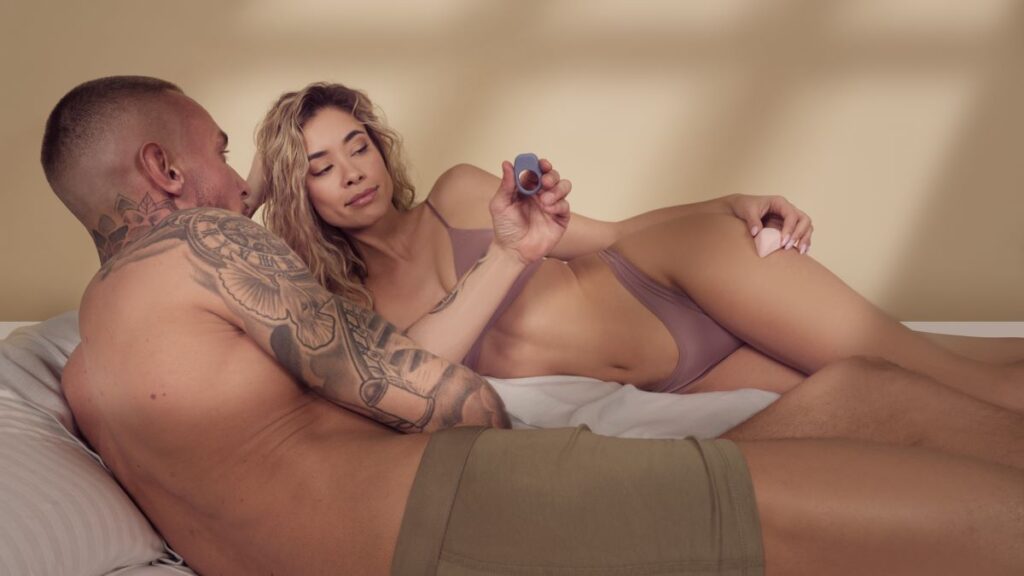
The study also found a link between false orgasms and Use of sex toys. Counterfeits were more likely to own toys, and those who did not own toys were more likely to consider purchasing one. Among owners, counterfeiters tended to use the toys alone, while those who had never counterfeited or had stopped counterfeiting were more likely to use them with a partner. Very few reported using toys with casual partners. This suggests that people who pretend use sex toys for pleasure or orgasm outside of sex with a partner, while people who don’t often find satisfaction in shared sexual exploration.
Pretending to have an orgasm hurts satisfaction
People who currently faked an orgasm reported slightly lower sexual, relationship, and life satisfaction than those who stopped or never faked. This supports the idea that faking can mask dissatisfaction with sex and relationships and even impact overall well-being.
However, the differences were minimal. Previous counterfeiters and never-counterfeiters reported nearly identical satisfaction scores, and differences between countries were minimal.
The price of pretending

Faking an orgasm seems like a shortcut to avoiding conflict or boosting your partner’s ego. However, this study suggests that it is not cost-effective in the long term.
By surveying more than 11,000 people in six countries, researchers found that many men and women faked orgasms. Those who stopped pretending reported positive changes. These included better communication, greater comfort and trust, more attentive sexual partners, and higher satisfaction scores than current counterfeiters. They seem to be doing better in bed, in love and in life.
However, the results come from a self-selected online sample and unvalidated survey items; They must therefore be interpreted with caution. Future research could examine whether stopping counterfeits achieves this goal more orgasms over time, or whether it simply makes sexual experiences more authentic, even without climax. It could also delve deeper into how partners react when the pretense stops or how relationship dynamics change once the truth is revealed.
For now, this study is a strong reminder that true intimacy begins with honest communication. And in a high-pressure world, sometimes the bravest thing to do is to stop pretending.
This article was originally published on LeShaw.
 English
  Spanish